-
Providing Video Feedback on Student Work

This video discusses some reasons why you might want to consider providing students with video feedback.
-
Thinking about Asynchronous Learning Components

How can we visualize asynchronous course components without ever having learned or taught in this modality? How can we move away from a lecture video approach when our foundational experiences of online learning were during the pandemic, when Emergency Remote Teaching, Zooms and a Google Folder, was the norm. It…
-
Three Discussion Strategies

Effective classroom discussions require intentional structuring to foster engagement and shared understanding. Discussions should be designed with clear objectives, whether synchronous or asynchronous, ensuring they serve a meaningful purpose beyond mere participation. A well-structured discussion follows three key phases: Respond, Discuss, and Reflect. In the Respond phase, students engage with…
-
Fishbowl

Fishbowl is a discussion strategy that focuses on both student-centeredness and listening skills. In a face-to-face classroom, you would arrange the students into a small group in the center of an outer ring. Students in the center would have a discussion and the students in the outer ring would observe.…
-
Jigsaw

A learning strategy you might find effective is an adaptation of the Jigsaw approach. Jigsaw was developed in the early 1970’s by Elliot Aronson. This short video describes a version of the Jigsaw approach adapted for live online sessions. It requires less movement between groups and includes an optional assessment…
-
Concept Attainment

Concept Attainment is an instructional strategy in which verbal or graphical examples are presented and students figure out the common attributes between, say, linear and non-linear functions or a villanelle and a sonnet. . This process enables to students to develop a set of attributes to clarify a concept. Procedure:…
-
Self-assessment

There is a luxury in self-reproach. When we blame ourselves we feel that no one else has a right to blame us. – Oscar Wilde Self-assessment -filling out self-evaluation forms, journaling, surveying, writing revisions, asking questions, and discussing to determine what students know and want to know. This practice helps…
-
Reflective Practice

“Reflective practice is a dialogue of thinking and doing through which I become more skillful.” – Donald Schon Reflective practice is a commitment on the part of the instructor to engage in the continuous improvement and refinement of teaching. Reflective Practice is a well-established component of effective teaching (Mezirow, 1991).…
-
Managing Online Discussions

A principal reason many instructors chose synchronous online environments is the real time interaction this mode affords. Synchronous environments most closely replicate the dynamism of a face-to-face discussion. However, synchronous environments can present technical challenges for both instructors and students. As a result, many instructors choose asynchronous environments, prompting the…
-
How to Assess Students Online
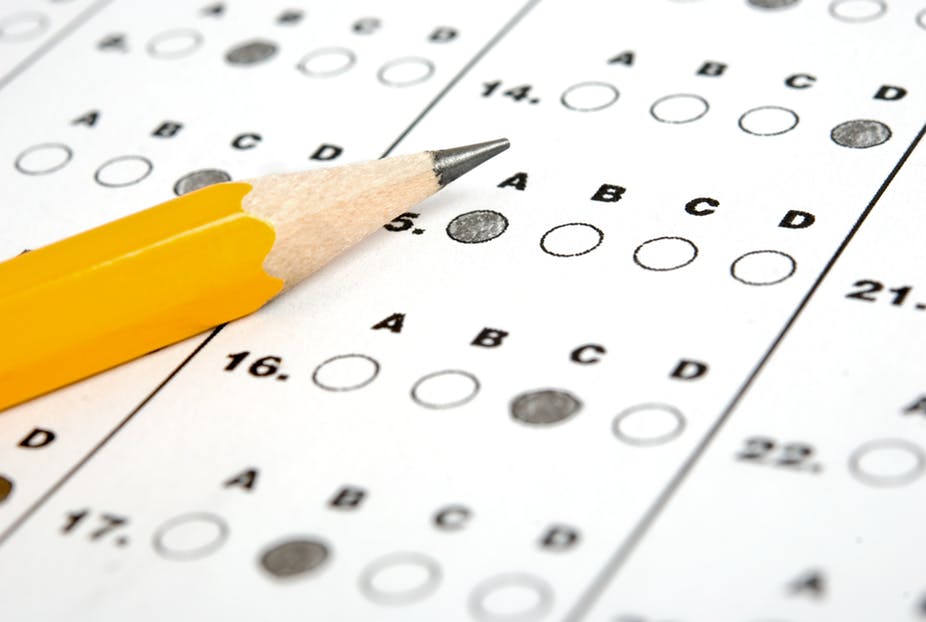
In a traditional face –to-face environment, students are assessed with what are called traditional assessments. These include tests and research papers. Alternative assessments, like portfolios or performances, are less common but can often be deployed in subjects like Art, Music or in spaces like Science Labs. Group projects and presentations…
-
Subscribe
Subscribed
Already have a WordPress.com account? Log in now.
 Learn at a Distance